First trial steering Committee

The First Trial Steering Committee Meeting was held as a event at the ISNCON 2023 venue, ITC Royal Bengal, on December 14, 2023. The primary focus of the meeting was Protocol Development and Consensus Building. PI’s from various sites participated, both in-person and virtually, to contribute their expertise and insights. Throughout the meeting, several key questions were discussed, encompassing various aspects of the trial protocol. These discussions were thorough and collaborative, ensuring that different perspectives were captured and considered. The outcomes of these discussions led to the implementation of several important protocol adjustments, which paves the way for current version of Master Protocol 1.6.

Training Sessions for Principal Investigators, Coordinators, and Study Staff

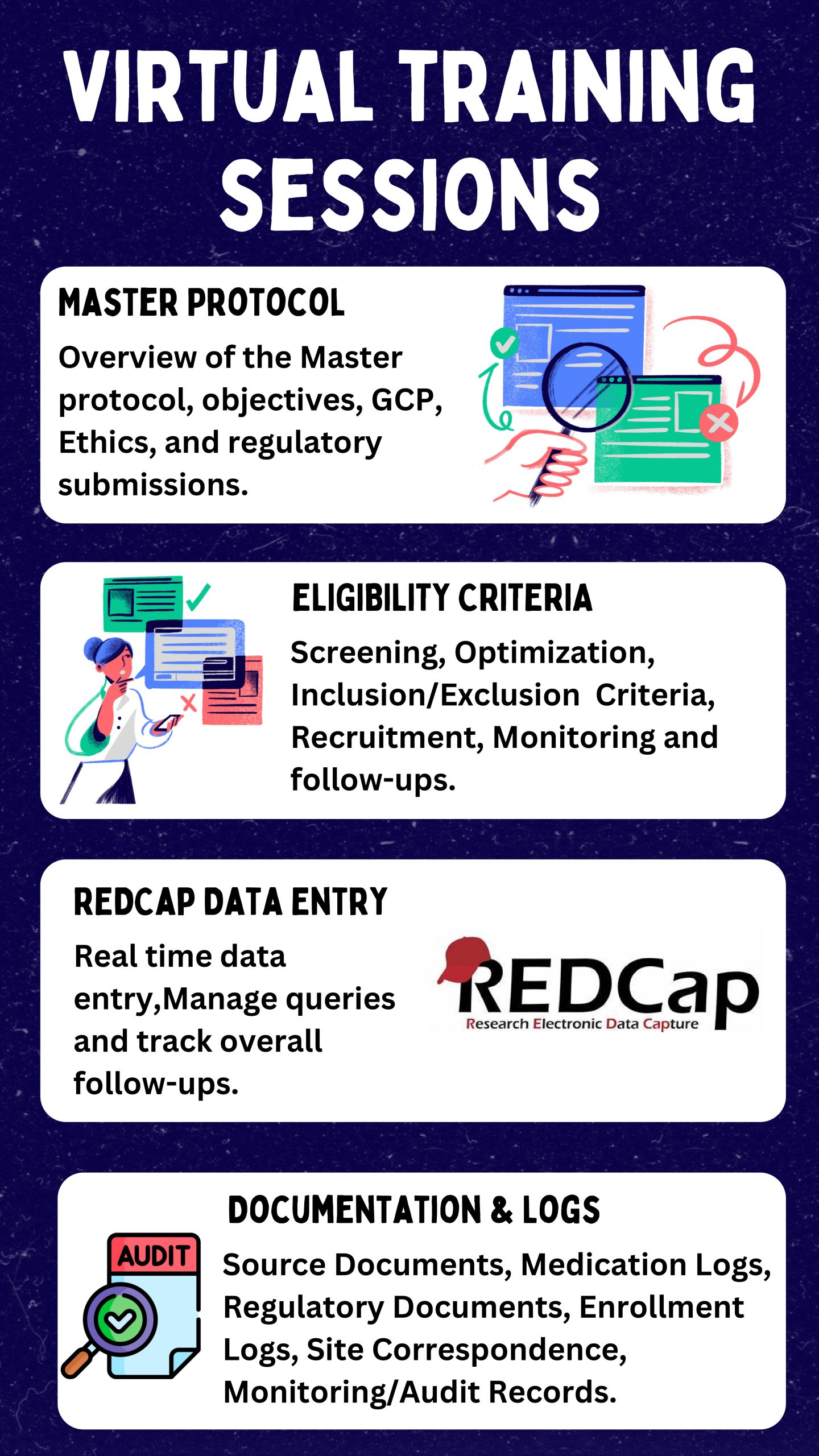
As part of our trial, Virtual training sessions were initiated for all study staffs. These sessions were conducted to ensure uniform understanding of the study protocol, regulatory requirements, and effective use of study tools such as REDCap for electronic data capture.
The first centralized virtual training session was conducted on 28 March 2025, this session covered:
  1. Overview of the Master protocol and objectives
  2. Good Clinical Practice (GCP) and Regulatory compliance and ethics submissions
  3. Site responsibilities and documentation standards
  4. Introduction to REDCap for data entry
  5. Q&A session for site-specific queries

Follow-Up Site-Specific Training Sessions

Following the initial group training, individual site-based training sessions were conducted support the specific needs of each participating site. These focused sessions ensured hands-on guidance in:
  1. REDCap account setup and user roles
  2. Real time data entry, managing queries, maintaining study logs and track overall follow-ups

Hypothesis 

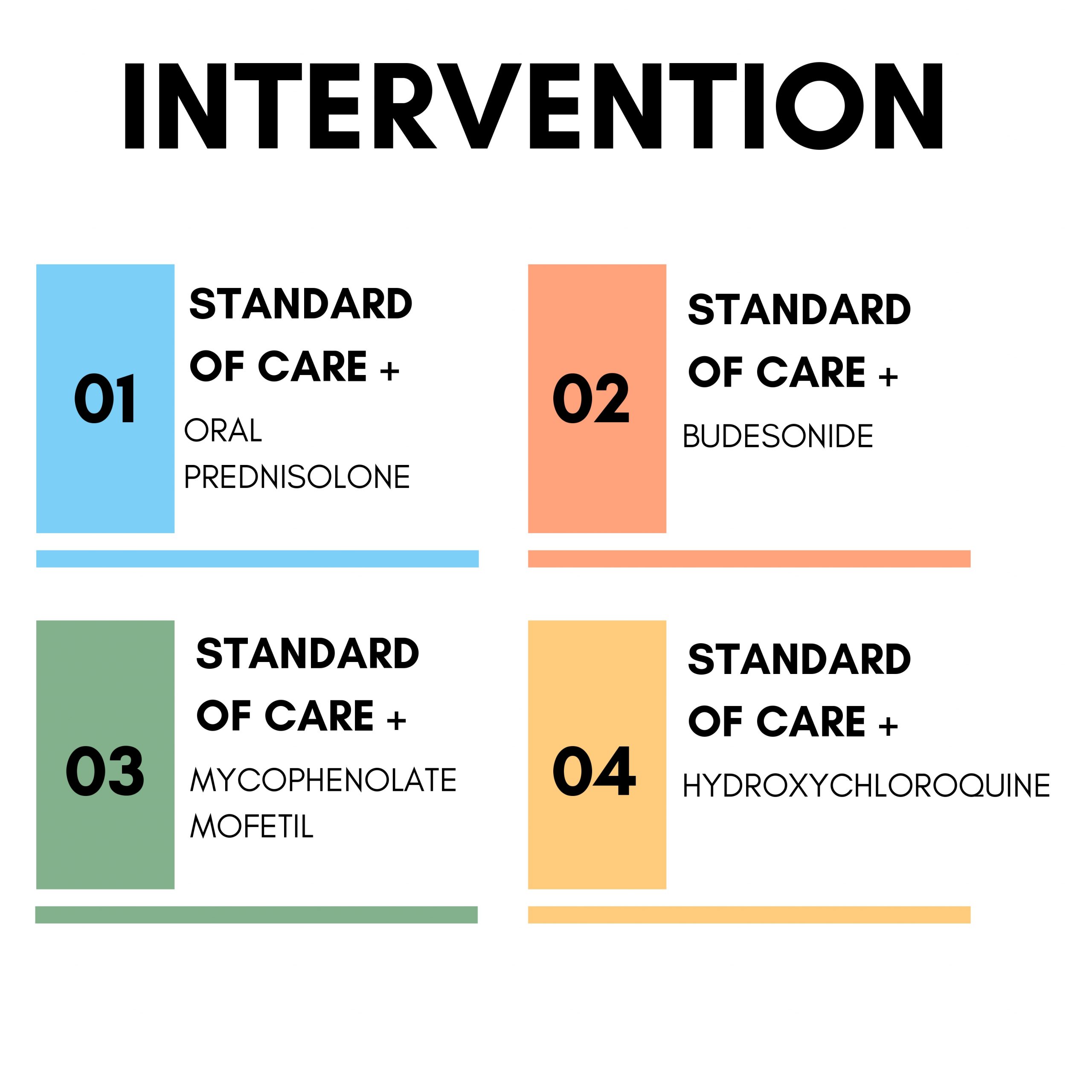
The trial hypothesizes that adding commonly available generic drugs to the Standard of Care (SoC)-maximal tolerated doses of ACEi/ARB and steady SGLT2i, will significantly improve kidney outcomes over two years in South Asian adults (≥18 years) with biopsy-proven primary IgAN at high risk of progression (UPCR ≥0.75g/g, eGFR ≥20 ml/min/1.73m²) despite good blood pressure control.
Standard of Care (SoC) aims for BP ≤140/90 mmHg for at least three months. Participants previously on immunosuppression may be included after a three-month washout.

Study design

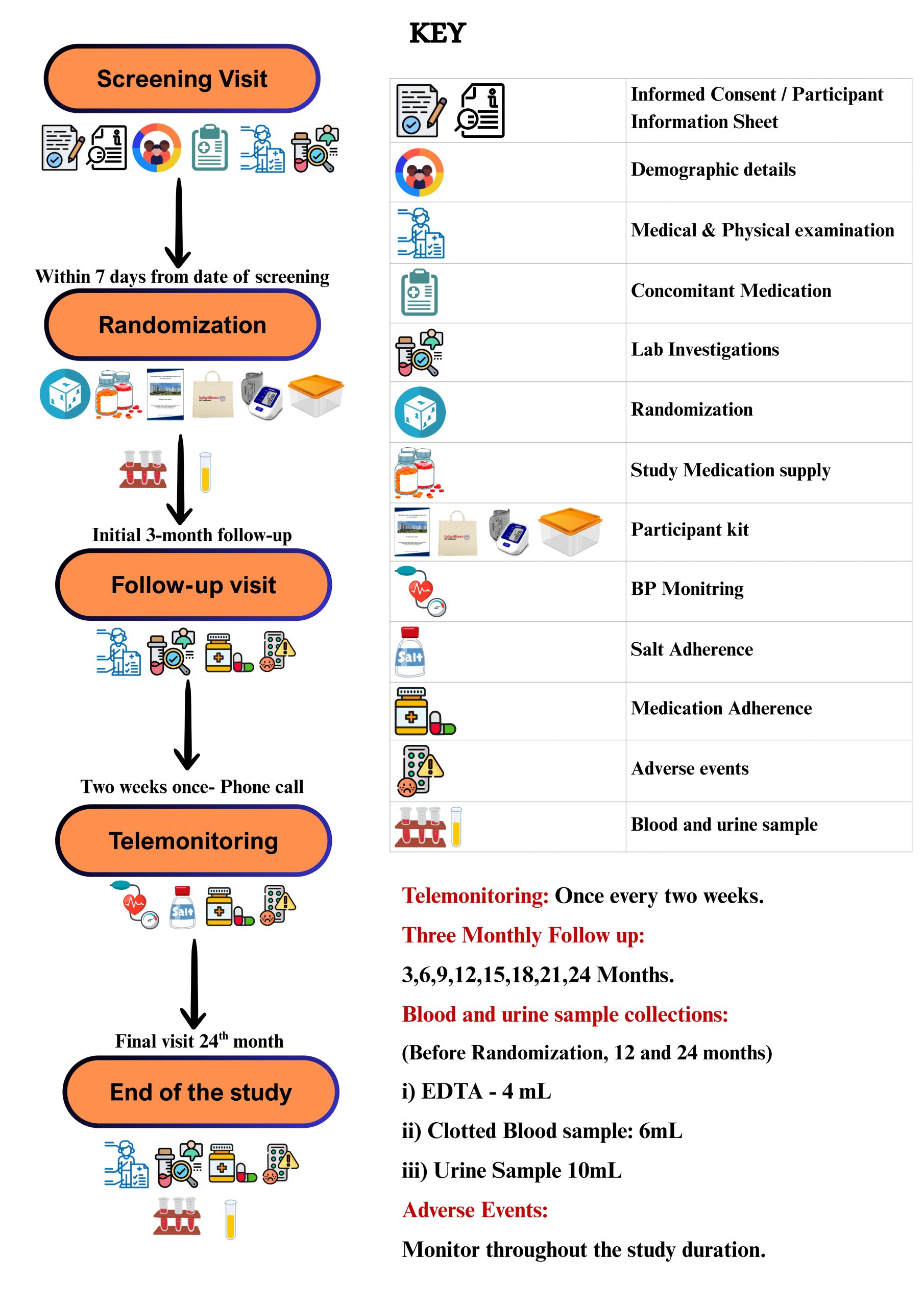
IA GRACE IgANT Visit Schedule

All patients with primary IgA nephropathy attending the Outpatient clinic/Inpatient to be screened for eligibility
• Inclusion/Exclusion criteria for Screening
• Check if the patient is on ACEi/ARB and SGLT2i.
• If not on the max tolerated dose of ACEi/ARB, to be optimised before screening
• Once optimized and should be on stable dose of medications for 3 months
  1. Age: Adults 18–65 years, male or female
  2. Consent: Must provide written informed consent before any study assessments
  3. Diagnosis: Primary IgA Nephropathy confirmed by renal biopsy
  4. Biopsy vintage: 
    a) If eGFR ≥45: biopsy of any vintage

    b) If eGFR <45: biopsy within the last 10 years
    c) If diabetic (The biopsy vintage must be within 5 years)
  5. Kidney Function: eGFR ≥20 mL/min/1.73 m² (CKD-EPI equation)
  6. Proteinuria: ≥1 g/24-hour urine or UPCR ≥0.75 g/g from a validated 24-hour sample
  7. Treatment Stability:
    1. On max tolerated dose of RASS blockers
    2. On stable 10 mg/day Dapagliflozin for ≥12 weeks
  8. RASS Blocker Intolerance: Allowed under defined criteria (e.g., hyperkalemia, hypotension, AKI)
  9. Blood Pressure: ≤140/90 mmHg at randomization; anti-hypertensives can be adjusted during screening
  10. Female Participants: Not pregnant and agrees to use effective contraception throughout the study
  • IgAN secondary to other conditions (e.g., liver cirrhosis) or other causes of mesangial IgA deposition (e.g., SLE, dermatitis herpetiformis)
  • Nephrotic syndrome at screening (serum albumin <3 g/dL AND UPCR >3.5 g/g)
  • Rapidly progressive glomerulonephritis (≥50% eGFR loss within 3 months)
  • Additional kidney diseases on biopsy (e.g., Diabetic nephropathy, FSGS, membranous nephropathy)
  • Female patients planning pregnancy
  • Systemic autoimmune disorders or chronic infections (TB, hepatitis B/C, HIV), chronic liver or lung disease
  • History of or planned organ transplantation (except corneal)
  • Morbid obesity (BMI ≥40 kg/m²)
  • Uncontrolled diabetes (HbA1c >8%)
  • History of demyelinating diseases (e.g., multiple sclerosis)
  • Recent use of prohibited medications, including:
  •   a) Oral steroids >2 weeks within 12 weeks before screening
        b) Immunosuppressants within 12 weeks (e.g., MMF, azathioprine)
        c) B-cell biologics within 6 months (e.g., rituximab)
        d) Other biologics or investigational drugs within 4 weeks 
        e) Traditional or Ayurvedic medicines within 12 weeks
        f) Endothelin receptor antagonists, spironolactone, nsMRA, GLP-1 agonists, hydroxychloroquine for >2 weeks within 3 months

  • History of unstable angina, advanced heart failure (Class III/IV), or significant arrhythmias
  • Active or recent serious infections requiring hospitalization or IV treatment
  • Cancer within past 5 years (except certain non-invasive skin or cervical cancers)
  • Known hypersensitivity to study drugs
  • Major surgery within 6 weeks before screening
  • Significant alcohol or drug abuse within 1 year
  • Unwillingness or inability to comply with study procedures
  •  
  •  
Participant Randomization Process
  1. For Randomization, site clinical trial coordinators should contact the Central Team at the toll-free number: 080-473-60777.
  2. The Central Team will verify all instruments in the screening event.
  3. Once a participant meets the eligibility criteria, they will be assigned to treatment group.
Special Participant Criteria
      1. Individuals with eGFR between 20–30 mL/min/1.73 m², or those unable to tolerate ACE inhibitors/ARBs or SGLT2 inhibitors, should collectively not more than 20% of the total study population.
To ensure optimal care and accurate data collection throughout the clinical trial, site clinical trial coordinators will contact participant once every two weeks telephonically. This visit will include:
  1. Recording home-monitored blood pressure readings
  2. Emphasizing the importance of dietary salt restriction
  3. Providing guidance on proper blood sugar control for diabetic participants
  4. Reviewing the participant diary
  5. Assessing medication adherence
  6. Monitoring and documenting any adverse events
Participants are encouraged to report adverse events at any time using our 24/7 toll-free number or via email (gracetrials@cmcv.ac.in), or WhatsApp messaging. 
In addition to the telemonitoring, participants will have comprehensive follow-up visits at every three months. During this visit, coordinators will:
  1. Screen for any adverse drug reactions (ADRs)
  2. Verify if any prohibited medications have been taken
  3. Conduct necessary laboratory investigations to monitor health status and safety